Feb 26, 2026
Your AI already knows how you think. But that understanding is scattered across every tool you use. What happens when it all connects?
AI Agent
Memory
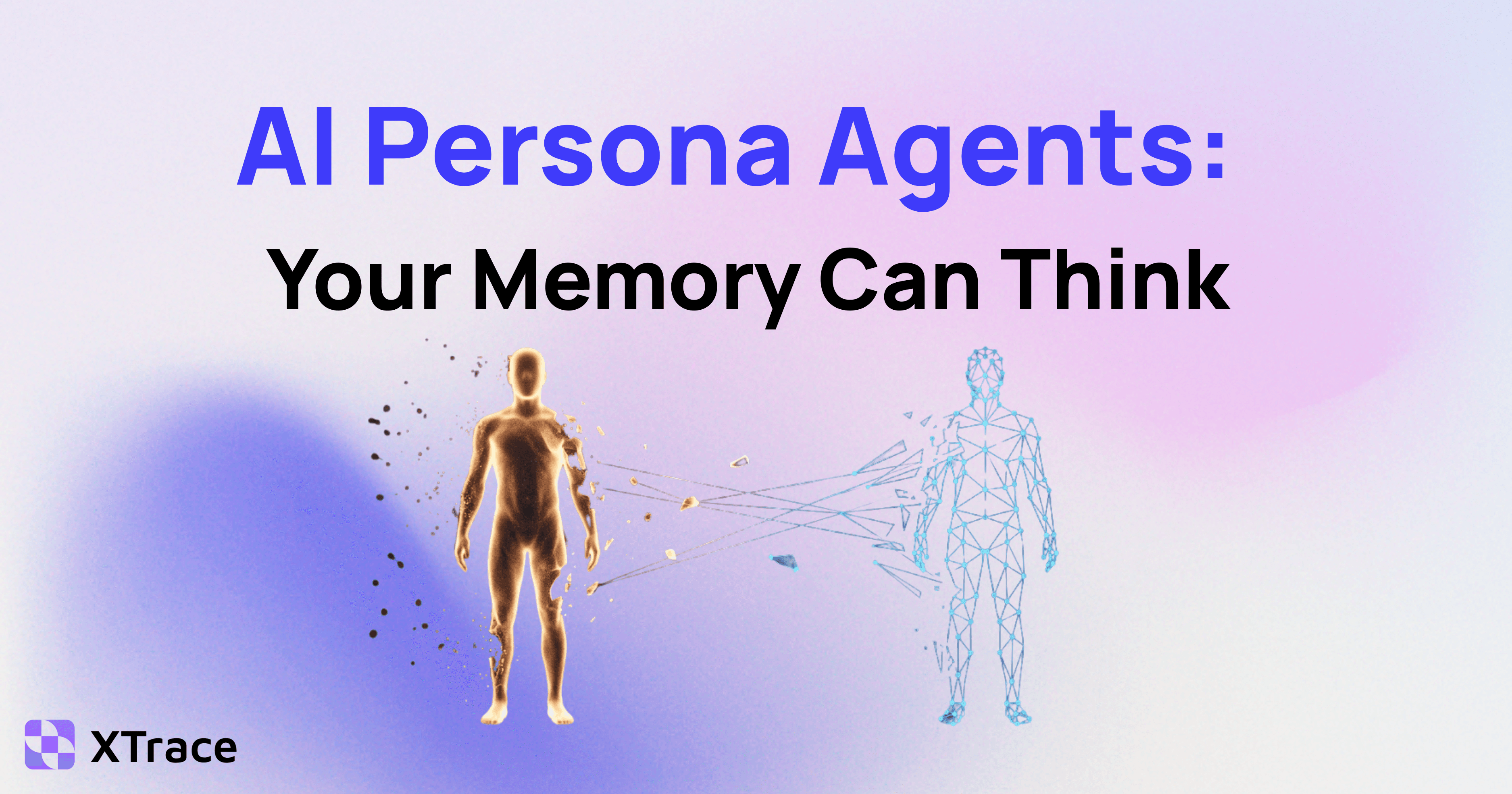
You use AI tools every day. ChatGPT, Claude, Cursor, Copilot, whatever fits the moment. And every time you do, you reveal a little more of who you are.
Not through a survey. Not through a personality quiz. Through work.
You say "keep it concise." You choose Postgres over MongoDB. You rewrite the intro three times because the tone isn't right. You ask to remove em dashes. You prefer bullet points over paragraphs.
These aren't random preferences. They're you. Your taste, your workflow, your decision-making patterns. Your professional identity, accumulated across hundreds of conversations and thousands of decisions.
But none of it carries over. The moment you switch tools, all of that stays behind.
Your digital persona already exists. It's just scattered.
Think about how much an AI tool knows about you by the end of a long session. Your communication style. What you care about. How you make tradeoffs. What kind of output you accept versus reject.
After a few months of regular use, the pattern is uncanny. Anyone who's used Claude or ChatGPT long enough has had that moment: "It finally gets me."
But that understanding is locked inside a single tool. Switch to something else and you're a stranger again. Every AI you use builds its own partial picture of you, and none of them talk to each other.
What if there could be?
The missing piece: memory you actually own
Today, a handful of AI tools offer basic memory features: pinned preferences, conversation history, user profiles. They help. But they share three fundamental limitations.
They're siloed. Your memory in ChatGPT doesn't follow you to Claude. Your Cursor context doesn't transfer to Copilot. Every tool builds its own incomplete picture.
They're shallow. Most memory features capture surface-level preferences, not the deep behavioral patterns that define how you actually work. How you make tradeoffs, what you push back on, what "good enough" means to you.
They're not yours. Your data sits in a vendor's database. You can't export it, port it, or control who accesses it. If the vendor changes their policy or shuts down, your accumulated context vanishes.
What's needed is something different: a memory layer that's portable across tools, deep enough to capture real behavior, and owned entirely by you, encrypted with keys only you hold.
And once that layer exists, something remarkable becomes possible.
When memory becomes a persona, and a persona becomes an agent
If your AI memory is rich enough, it's no longer just memory. It's a persona. A detailed, authentic representation of how you think and work.
And a persona can be instantiated as an agent.
Not a generic AI assistant. An agent that thinks like you. Responds like you. Makes the same tradeoffs you'd make. Has the same preferences and the same pet peeves.
This isn't science fiction. LLMs are already remarkably good at adopting a persona when given enough context. The missing piece has always been: where does that context come from?
Most AI personas today are hand-written. A paragraph of backstory, a few bullet points of traits. They're thin. They break down fast. But a persona built from months of real, structured memory? That's not a character sketch. That's a behavioral fingerprint.
Here's where it gets interesting.
What persona agents unlock
Once you can spin up an agent that behaves like a real person, the use cases multiply fast.
Ship products faster. You're building a developer tool. Instead of waiting three months for beta feedback, you spin up 200 persona agents, each representing a real behavioral pattern from real users (with their permission). Point them at your onboarding flow. The persona that hates configuration wizards bounces on step two. The one that learns by example gets stuck because your docs have no code samples. You find these problems in an afternoon.
Run research at real scale. Want to know how your user base would react to a pricing change? A redesigned dashboard? Ask 500 persona agents. Their responses aren't the bland, agreeable output of a generic LLM. They carry the actual preferences and decision patterns of real users. The skeptic is skeptical. The power user asks about the edge case you didn't consider.
Simulate team dynamics. Designing a collaboration feature? Spin up a team of persona agents: the meticulous planner, the move-fast engineer, the designer who cares about whitespace. Watch how they interact with your tool. Find the friction that only emerges when different work styles collide.
Create a personal stand-in. Going on vacation? Your persona agent can triage requests and handle routine decisions the way you would. Not perfectly, but close enough to keep things moving.
Each of these scenarios depends on one thing: memory that's authentic enough to power a believable persona. And authenticity requires something most people overlook.
Why privacy isn't optional. It's the engine.
Here's what most people miss: privacy isn't just an ethical nice-to-have. It's a technical requirement for this entire concept to work.
People only generate rich, honest memory data when they trust the system. If your preferences, decisions, and work patterns sit in a vendor's database in plaintext, you'll self-censor. You won't say "I hate our current CI pipeline" if you think your employer might read it. You won't express real opinions if the data isn't yours.
Self-censored data produces self-censored personas. Bland, agreeable, and useless.
Privacy-preserving infrastructure changes the equation. When your data is encrypted with keys only you hold, when the server literally cannot read your memory, you stop filtering. You're honest. And honest data produces personas that actually work.
That's not a privacy policy. That's a mathematical guarantee.
How XTrace makes this real
This is exactly what we're building at XTrace.
XTrace is a private memory layer that sits between you and every AI tool you use. It captures your preferences, decisions, and work patterns as structured knowledge. Encrypted end-to-end, portable across any tool, and owned entirely by you.
Your memory travels with you. Switch from ChatGPT to Claude to Cursor and back. XTrace ensures every tool has your full context from day one. No re-explaining. No starting over.
Under the hood, XTrace uses encrypted semantic search and homomorphic encryption so your memory can be searched and retrieved without ever being decrypted on the server. Your data stays private not because of a policy, but because of math.
And because XTrace captures real behavioral data over time, not a hand-written profile, it produces the kind of rich, structured memory that can power authentic persona agents. The kind that actually behave like real people, because they're built from how real people actually work.
The road ahead
Today, we test software with QA teams, beta users, and A/B tests. Slow, expensive, and limited in coverage. We make product decisions based on surveys, dashboards, and gut feel. Tomorrow, we could simulate how thousands of real behavioral patterns respond to a change before writing a single line of code.
The enabling layer isn't smarter AI models. It's better memory. And it starts with one person: you.
Every AI conversation you have generates memory. Every preference, every decision, every artifact. Start capturing it. Structure it. Own it. From your memory comes your persona agent. From your team's memory comes real behavioral patterns. From your users' memory (with their consent, under their control) comes a dataset no amount of synthetic generation could replicate.
Your AI already knows how you think. Right now, that understanding is scattered.
What happens when it all connects?
Frequently Asked Questions
What is a persona agent and how is it different from a regular AI assistant?
A persona agent is an AI agent built from your real behavioral data: your preferences, decision patterns, communication style, and work habits captured over time. Unlike a generic AI assistant that starts from scratch or follows a brief profile, a persona agent mirrors how you specifically think and work because it's grounded in months of structured memory from your actual AI interactions.
How does XTrace keep my memory data private?
XTrace uses end-to-end encryption and homomorphic encryption so your memory data can be stored, searched, and retrieved without ever being decrypted on the server. Only you hold the encryption keys. This means the system can perform semantic search across your memory while the server literally cannot read any of your data. It's a mathematical guarantee, not just a policy.
Can I use my XTrace memory across different AI tools?
Yes. XTrace is designed as a portable memory layer that works across AI platforms — ChatGPT, Claude, Gemini, Cursor, and more. Your accumulated context follows you wherever you work, so you never have to re-explain your preferences or start from zero when switching tools.
Are persona agents available today?
The foundational technology — private, portable, structured AI memory — is available now through XTrace. Persona agents represent the next evolution of what becomes possible once your memory is rich enough, and we're actively building toward that future. You can start capturing and owning your AI memory today so that when persona agents arrive, yours is ready.

© 2026 XTrace. All rights reserved.